MIB / Vehicle Hub
A shared picture
of what comes next.
A north-star vision to help MIB align its roadmap around a more connected view of vehicles, insurance and customers.
- The client
- MIB
- The work
- North-star vision · Product concept
- The ambition
- The 2030 vision for Navigate
The opportunity at a glance
Connect vehicle, customer, insurance and claims information.
Bring MIB services and third-party sources into the same experience.
Support better-informed decisions for insurers and customers.
Concept ambitions from the Figma presentation. These are intended benefits, not measured outcomes.
One organisation.
Different experiences.
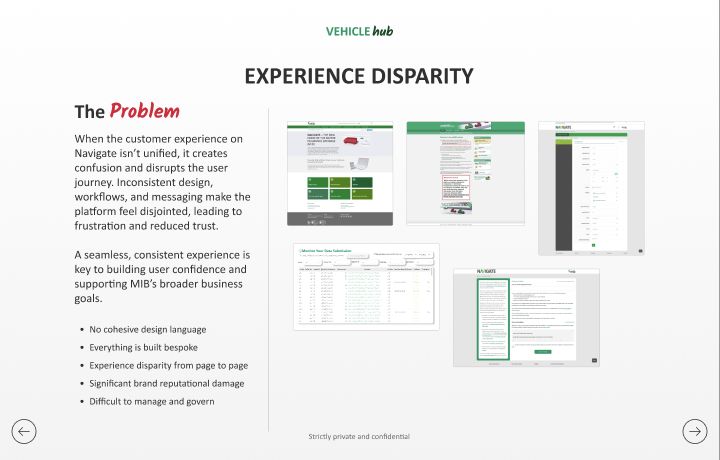
Navigate’s customer experience wasn’t unified. Inconsistent design, workflows and messaging made the platform feel disjointed, creating confusion and disrupting the user journey.
With no cohesive design language, pages were built as bespoke solutions. That made the experience harder to manage and govern, and put customer confidence and MIB’s reputation at risk.
- No shared design language across services.
- Different experiences from page to page.
- Bespoke solutions that were difficult to maintain.
- More friction for users and less confidence in the platform.
A seamless, consistent experience was needed to support both customers and MIB’s broader goals.
A single view.
Built to evolve.
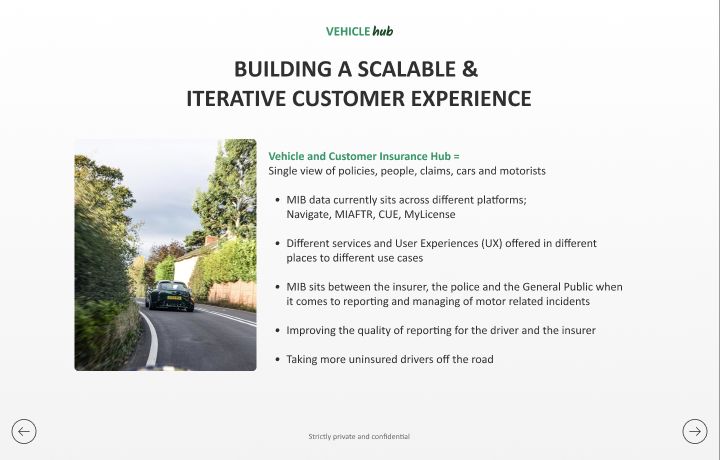
Vehicle Hub proposes a scalable, iterative customer experience: a single view of policies, people, claims, cars and motorists.
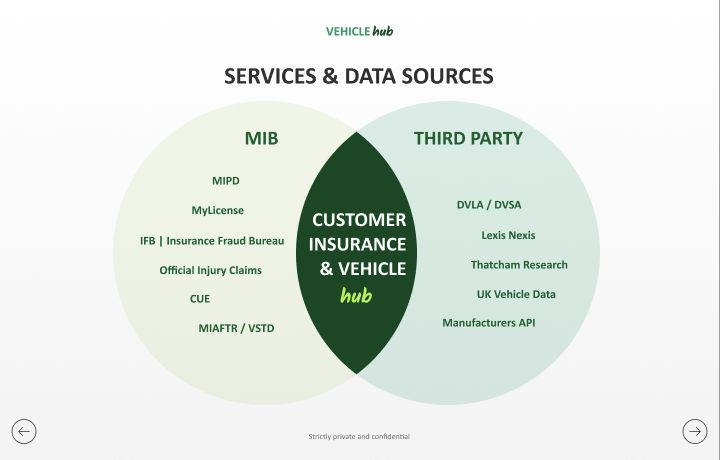
MIB data sits across Navigate, MIAFTR, CUE and MyLicense, with different services supporting different use cases. Bringing these sources together would give insurers, police and the public a more connected way to report and manage motor-related incidents.
The aim is to improve the quality of reporting for drivers and insurers, protect road users and help take more uninsured drivers off the road.
Connecting the information
Services & data sources
MIB
- MIPD
- MyLicense
- IFB / Insurance Fraud Bureau
- Official Injury Claims
- CUE
- MIAFTR / VSTD
& vehicle hub
One connected view
Third party
- DVLA / DVSA
- Lexis Nexis
- Thatcham Research
- UK Vehicle Data
- Manufacturers’ APIs
The concept brings MIB services and third-party information together around the customer, their insurance and their vehicle.
From isolated records
to a connected journey.
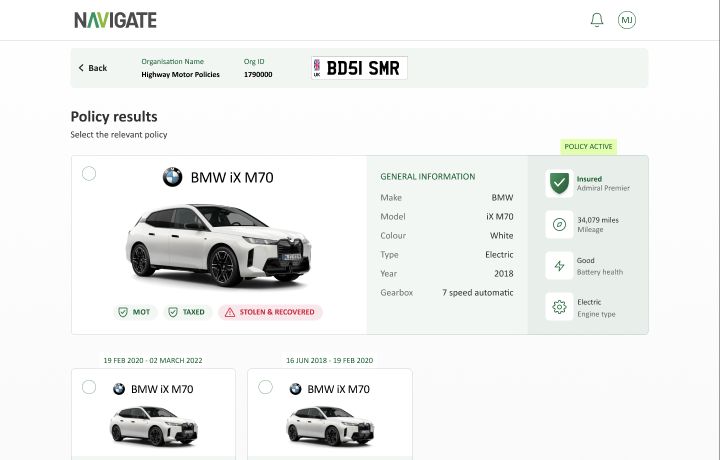
The concept makes the vehicle a recognisable starting point. Policy results combine imagery, vehicle details and status information so users can identify the right record before moving forward.
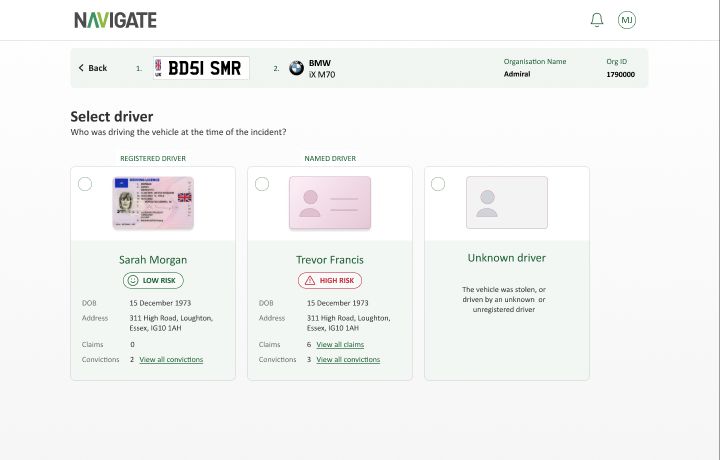
The journey then connects the vehicle with the people involved. Driver selection distinguishes registered, named and unknown drivers, making the next decision explicit.
These screens explore how a complicated set of relationships could become a more understandable sequence of choices.
More context.
Less hunting around.
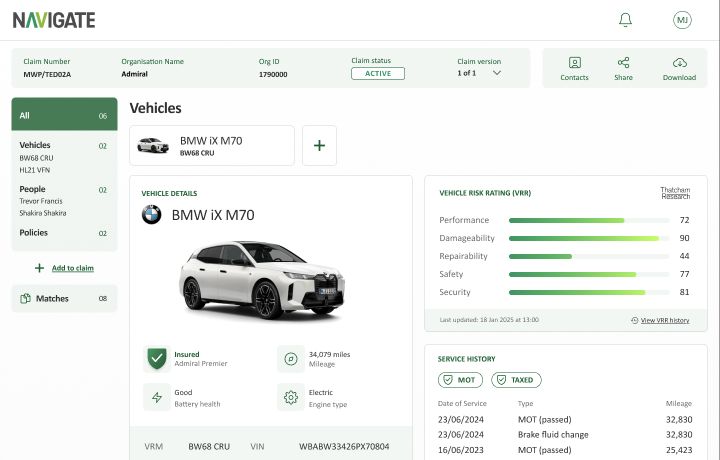
The combined record brings vehicles, people and policies into a shared workspace. Vehicle details sit alongside risk ratings and service history, with routes to related records and matches.
The design direction is about keeping useful context close to the task, rather than asking users to piece it together across separate services.
A direction
worth building towards.
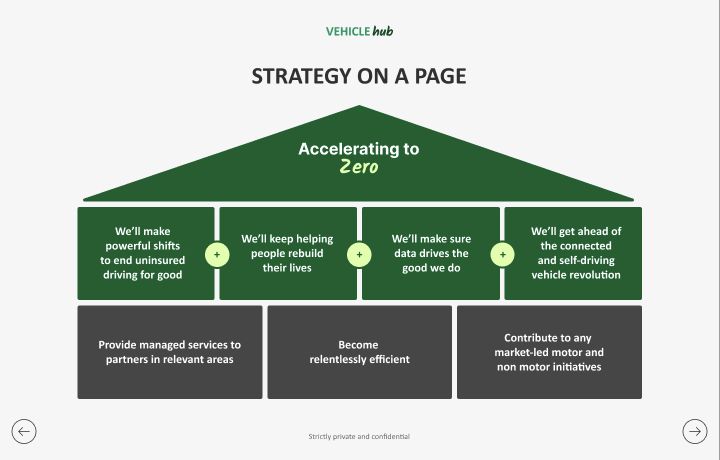
The first five presentation screens place Vehicle Hub within MIB’s “Accelerating to Zero” strategy. Better use of data, greater efficiency and support for connected vehicles form part of that broader direction.
I created Vehicle Hub as a north-star vision for the business to align its roadmap against. Making the proposition tangible gave future-facing discussions a shared reference point. The concept still needed validation; the screens illustrate a direction rather than a launched service.
Explore the insurer prototype in Figma ↗
View the original problem and opportunity screens